the first man to climb kilimanjaro

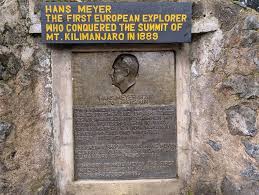
the first man to climb mount Kilimanjaro explore the story about the first expedition on kilimanjaro Hans Meyer was the first European man to hit the summit of Africa , he did successful ascent of Mount Kilimanjaro in 1889 via Marangu route( Currently known as Coca-Cola route). He was German geographer and  publisher, he was also an honorary professor for colonial geography and colonial policy in Leipzig , born in 22 march 1858  in Leipzig , Germany and died in 5 Jul 1929. He attended the University of Leipzig, where he pursued studies in geography and natural sciences. How many attempts does Meyer did on Kilimanjaro? Meyer did three Kilimanjaro climbing attempts. first attempt in 1887 He was accompanied by Baron von Eberstein,  however he was unsuccesfuly , he made only up to the base of Kibo peak  at 5486 m , but he  managed not to  reach at 5895 m   summit. This was due to various reasons  including logistical issues and difficulties with the equipment necessary to handle the deep snow and ice. However, this attempt gave him a valuable experience and insight on Kilimanjaro as  laid foundation  for his subsequent expeditions. Second Attempt in 1888 with accompanion of one Austrian geographer Oscar Baumann.  During this expedition, Meyer was also unsuccesifuly to reach the summit of kilimanjaro for he and his companion found themselves taken into captivity during an anti‐colonial uprising or the event known as Abushiri Revolt  , this led meyer  to abandon his climb. Meyer and his fellow weren’t freed until a sizable ransom was paid to rebel leader Abushiri ibn Salim al-Harthi. third expedition took place in 1889 At this time he succesful hit the summit at 5,895 m of kibo peak,After two previous climb attempts failures, meyer had learned and gained experiences on how he had to do so as his desires can be accomplished,  so at this time he prepared very well and he  came with a very good strategic approach to tackle  previous  critical issues that hindered them from geting to the summit. He established multiple high-altitude camps with with pllenty supply of food and water, this include Abbott Camp at 3,894m, Kibo Camp at 4,263m, and a camp near a lava cave at 4,578m.He maintained resilience and with the help of expert guidance of the local Chagga guide, Yohani Kinyala Lauwo made him suceed , at thiat day  he Planted the German flag on the summit of Mount Kilimanjaro and  named the summit as Kaiser Wilhelm peak, he did so to honour German Emperor Kaiser Wilhelm and the whole germany  coloniarism , however later after tanzania has gained independence renamed the peak as ‘Uhuru’ Peak in 1964 to mean ”the peak of freedom” Also at this time he was accompanied with one Austrian mountaineer Ludwig Purtscheller. So with the help of one  local guide named Yohani Kinyala Lauwo,two local headmen, nine porters, three local supervisors, and a cook made meyer  succeed to reach the summit of kilimanjaro. Meyers expedition at kilimanjaro mountain opened the doors to Kilimanjaro, leaving a mark on both the mountain and mountain tourism.Each expedition was followed by the publication of elaborately designed books manyer’s achievements is subject to criticisims from scoolars, arguing on the question as to whether mayer was the fist person to climb kilimanjaro?, posing there argument that , How about the local Chagga people whose had lived alongside kilimanjaro for generations?, how many unnamed African guides had already stood on that peak?, perhaps even before any European countries knew that the mountain existed. Local Chagga people had certainly climbed high on the mountain for generations, though oral histories don’t definitively confirm summit attempts. According to Lauwo, who was only 18 years only during expedition he and other local guides constantly demonstrated their kilimanjaro knowledge and experience by saving the Europeans by showing them where to find water, which routes to avoid, how to read the mountain’s moods, but while Meyer’s name appears in every history of Kilimanjaro, Yohani Kinyala Lauwo remained largely forgotten. Furthermore the mountain held spiritual significance they were going to pray in Kilimanjaro, why would they need to stand on its highest point to prove anything?. Further more there are other european who made several attempts to climb kilimanjaro however none of them  succeeded to hit the summit, these argument put mayer’s achievement in uncomfort zone.

the first man to climb kilimanjaro Read More »

A Group of climbers climbing Mount Kilimanjaro, Tanzania - on january,15th, 2026

The best time to climb mount kilimanjaro

Kilimanjaro’s climbing seasons explained the best time to climb kilimanjaro timing mathers Are you ready to conquer  the undisputed highest point in Africa?  Discover the secrets of timing your ascent in our latest article​ in this article you will get to unlock the ideal seasons for breathtaking views, optimal weather conditions, and fewer crowds. You’ll learn about the unique experiences each month offers, ensuring you choose the perfect time for your adventure. Don’t miss out on this essential guide to making your dream climb a reality Kilimanjaro’s climbing seasons Dry season Dry season starts on January to mid-March and June to October ; this is the high season and busiest months it is the good time where the number of tourist who climb kilimanjaro is on high, normally these months offer better weather condition and drier trail hence increase high summiting success rate. rainy season The rainy seasons starts from late March to May and from November to late December, this is low season due to fewer number of visitors who climb Kilimanjaro , generally these months characterised with increase in precipitation, muddy and slippery trails  as well as harsh summit conditions often with snow and ice,  on these months summiting success rate is low When is the best time to climb mount kilimanjaro? you might be asking your self as to  when is the best time for you to conquer the roof of africa, actually, Kilimanjaro mountain can be climbed throughout the year, however there some months where it become very dangerous to attempt it, with low summiting success rate. Factors like Savere colder temperature, heavier rainfall and comprehensively snow falling on the summit cause discomforts during trekking and impact to climbing seasons.However having good knowledge on the time to climb help you to plan trip to kilimanjaro at convenient time. WhICH is the best month to climb Mount Kilimanjaro?  There is no specific month to climb Kilimanjaro, because one month differ from another and every month  have its own beauty and benefits compared to another, so choosing the best time to climb Kilimanjaro can vary from person to person depending  on individual’s preferences and tolerance for specific weather conditions.  However, we can only recommend to you from our experience of working on Mount Kilimanjaro that the best time to climb Kilimanjaro is during dry seasons which are considered the most favorable for climbing Kilimanjaro, because it offer clearer skies, less precipitation, and more stable trail conditions which increase your summiting success rate. NomalThere is no single best month to climb Kilimanjaro, as each offers unique beauty and advantages. The ideal time for your climb depends on your personal preferences and tolerance for various weather conditions. Based on our experience, we recommend climbing during the dry seasons, from January to March and June to October. These months offer the most favorable conditions with clearer skies, less precipitation, and more stable trails, significantly increasing your chances of a successful summit. To make the best choice for your adventure, it’s important to understand the specific weather conditions of each month.ly dry seasons  occur from January to March and June to October. What you need to know is  the weather conditions of each specific  month to help you   choose the best time for your adventure: January January falls within the first dry season.Weather Conditions: Generally clear skies and warm temperatures at lower elevations. As you ascend, temperatures drop significantly, especially at night, often reaching below freezing at higher camps and the summit. There’s a moderate chance of rain at the base and snow at higher altitudes, but it’s typically less than during the wet seasons.Advantages: Good visibility, less crowded than July-September, and generally stable weather for summit attempts. Ideal for Climbers who prefer cooler, drier conditions and are comfortable with the possibility of some precipitation. It’s a good option for those looking to avoid the peak crowds of later dry months. February February continues the dry season, often considered one of the best months. Weather Conditions: Similar to January, with generally clear skies and good visibility. Temperatures remain cool to cold at higher elevations, with summit temperatures well below freezing. Precipitation is typically low. Advantages: Excellent visibility for stunning views, relatively low rainfall, and stable trail conditions. Ideal for: All categories of climbers, particularly those seeking optimal weather conditions with a good balance of clear skies and manageable crowds. March March marks the transition from the dry season to the long rainy season. Weather Conditions: The beginning of March can still offer good climbing conditions, but as the month progresses, the likelihood of rain increases significantly, especially at lower and middle elevations. Higher altitudes will experience more snow and colder temperatures. Advantages: Fewer crowds, which can lead to a more solitary experience. The landscape can be very green and lush at lower altitudes. Ideal for: Experienced climbers who are prepared for wet and potentially muddy conditions. Budget-conscious climbers might find lower prices due to fewer tourists. April April is in the heart of the long rainy season. Weather Conditions: This is one of the wettest months on Kilimanjaro. Expect heavy rainfall at lower and middle elevations, and significant snowfall at higher altitudes. Trails can be very muddy and slippery, and visibility is often poor due to clouds and fog.Advantages: Extremely few crowds, offering a truly remote experience. The mountain is at its most pristine and green. Ideal for: Highly experienced and adventurous climbers who are comfortable with challenging, wet, and cold conditions. Not recommended for first-time climbers. May May continues the long rainy season, though rainfall may start to decrease towards the end of the month. Weather Conditions: Similar to April, with substantial rainfall and snow. Trails remain muddy and challenging. Visibility can still be limited.Advantages: Minimal crowds, allowing for a more intimate connection with nature. Advantages: Minimal crowds, allowing for a more intimate connection with nature Ideal for: Very experienced and resilient climbers who prioritize solitude over ideal weather. June June marks the beginning of the second dry season. Weather Conditions: The weather begins to improve significantly.

The best time to climb mount kilimanjaro Read More »

Best Time to Visit Serengeti

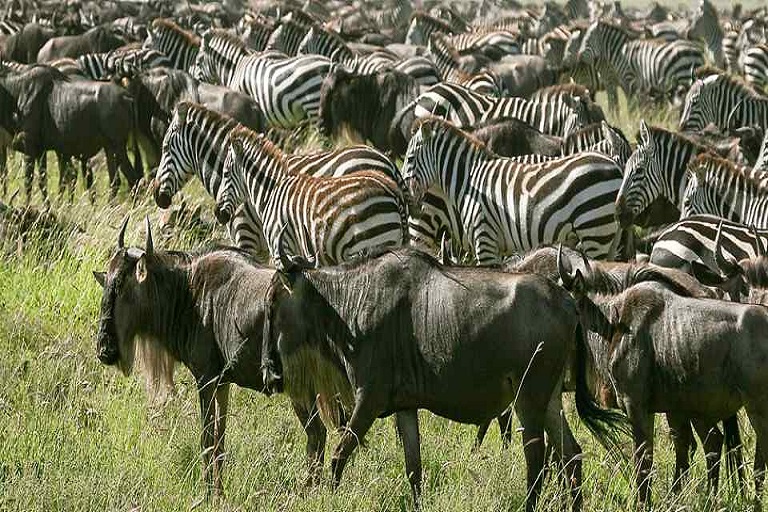
Best Time to Visit Serengeti – Month-by-Month Guide The Serengeti is a year-round safari destination, but the best time to visit depends on what you want to see whether it’s the Great Wildebeest Migration, predator action, or lush landscapes. In this month-by-month guide, we’ll break down what to expect in each season to help you plan your dream Serengeti safari in 2025 or 2026. Best Time to Visit Serengeti January 2025Southern Serengeti January – Calving Season Begins Highlights: Wildebeest calving in Ndutu area (Southern Serengeti) Weather: Warm and mostly dry Best For: Predators like lions and cheetahs hunting newborns FebruaryPeak Calving & Predator Action 🌧 February – Peak Calving & Predator Action Highlights: Over 500,000 wildebeest calves born Weather: Short rains may appear Best For: Photography and dramatic wildlife scenes 🍃 MarchEnd of Calving & Beginning of Migration March – End of Calving & Beginning of Migration Highlights: Herds begin to move northwest Weather: Start of long rains Best For: Less crowded safaris and lush scenery AprilGreen Season & Fewer Tourists April – Green Season & Fewer Tourists Highlights: Resident animals still visible Weather: Long rains, muddy roads Best For: Budget travel and birdwatching

Best Time to Visit Serengeti Read More »